
Responsible Gambling Controls for Online Slot Play


Responsible play begins before a first spin, not after a loss. For readers comparing sweet bonanza free play information with real-money options, the most useful question is whether the hosting casino provides practical controls and explains them clearly. Sweet Bonanza is only the game; account limits, self-exclusion, session tools and support come from the operator. This guide explains how to assess those safeguards without assuming that every Canadian-facing casino offers the same settings.
Start with the controls you can set before playing
A sensible first step is to look for limits that apply before money enters the account. A deposit limit can restrict how much you add over a chosen period, while a loss limit focuses on the amount you can lose. These are not interchangeable: a player could deposit a modest amount, win temporarily and then give back the balance. If available, set both rather than relying on one figure.
Session controls are equally useful when play tends to continue unnoticed. A reality check can display the elapsed time, the amount staked or the account result at regular intervals. Some operators also offer time limits or automatic session reminders. These features are most effective when selected before opening the game, because changing a boundary during an emotional session can defeat its purpose.
Choose amounts using ordinary household finances, not a hoped-for win. Gambling funds should come only from money left after rent, food, debt payments, savings and other essentials. Never treat a limit as a target to spend. If a casino makes limits difficult to find, explains them vaguely or offers no clear account-control page, that is a reason to pause and ask support how the system works before playing.
How to check whether an operator’s safeguards are usable
Responsible-gambling tools are valuable only when a player can locate and activate them without friction. Check the account menu, help centre and terms for deposit limits, cooling-off periods, loss controls, session reminders and self-exclusion. The names may differ between operators, so read the description rather than assuming that “limit” means a particular type of restriction.
Pay attention to timing and reversibility. Some limits take effect immediately, while others may apply only after a waiting period. A lower limit may be accepted quickly, but an increase could require a delay. A cooling-off request should not be treated as a temporary pause that can be casually cancelled. The operator should explain when each control starts, how long it lasts and whether it applies across related accounts.
Support should provide direct, non-judgmental answers about setting controls, closing an account and obtaining play records. Keep confirmation emails or screenshots showing the request and its effective date. For broader Canadian information about safer gambling and support options, consult the Responsible Gambling Council’s public resources. That general guidance does not confirm any casino’s specific features, so the operator’s own terms remain essential.
Do not confuse game settings with account protection
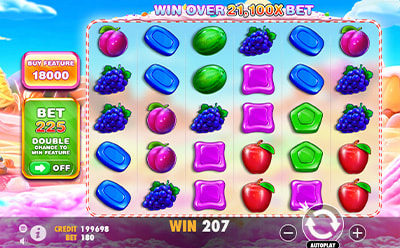
The slot interface may offer stake selection, game information, sound controls, game history and, depending on the casino’s version, autoplay settings. These options affect how the game behaves, but they are not a substitute for account-level protection. Reducing the stake does not create a spending limit, and stopping autoplay does not prevent manual play from continuing.
Autoplay deserves particular care because it can make a session feel less active. If it is available, review every stop condition before using it, including balance changes, a large win, a feature trigger or a selected number of rounds. A stop condition is not a guarantee that play will end at a preferred result; it is simply an instruction that may interrupt one sequence.
Game history can help you review decisions after a session. Compare the record with your own limit and note how long you played, how much you staked and whether you increased bets after losses. Do not use a short demo session to infer likely returns or to “test” whether a strategy works. Random outcomes remain uncertain, and a previous result does not make a future result more likely.
Which warning signs call for a pause?
Warning signs often involve behaviour rather than a particular amount of money. Chasing losses, hiding play from family, borrowing to gamble, missing work or essential tasks, and feeling unable to stop are all reasons to step away. Repeatedly cancelling limits or reopening accounts after a break also suggests that ordinary controls may no longer be enough.
Take a practical pause as soon as one of these signs appears. Close the game, log out, remove saved payment details where possible and avoid making a new deposit while upset. Write down the actual loss or time spent instead of estimating it from memory. Avoid alcohol or other conditions that can weaken judgment, and speak with someone you trust before deciding whether to continue.
When a pause is not sufficient, ask the operator about account closure or self-exclusion rather than merely disabling notifications. Self-exclusion is intended to create a stronger barrier for a defined period, but the process and coverage depend on the operator and applicable provincial rules. Ask whether all relevant accounts are included and what happens to any remaining balance or pending verification.
Build a simple plan for safer play
A written plan turns general caution into decisions made in advance. Record the maximum amount and time you are willing to risk, the events that will end the session, and the action you will take if the limit is reached. For example, the plan might require leaving the site, waiting until another day and reviewing the account history before playing again.
Keep gambling separate from financial essentials. Do not use credit intended for bills, increase a stake to recover a loss or regard a bonus, free spin or game feature as free money. Promotional conditions can include expiry dates, wagering requirements, maximum-bet restrictions and contribution rules. These belong to the casino’s promotion, not to the standard game, so read the relevant terms before accepting it.
Review the plan periodically, especially after an unusually long session, a large loss or a decision that felt difficult to control. If the plan repeatedly fails, stop playing and seek confidential support rather than attempting a stricter betting system. No responsible-gambling tool can remove the risk of loss, but clear boundaries, account records and timely support can make risky behaviour easier to identify and interrupt.
Frequently asked questions
Are game-level settings the same as responsible-gambling tools?
No. Stake controls, autoplay and game history belong to the game interface and can help with awareness, but they do not replace deposit, loss, session, cooling-off or self-exclusion controls. Those stronger safeguards are managed by the casino, and their availability and operation must be confirmed in its account settings or terms.
What should I do if I cannot stay within my limit?
Stop the session rather than raising the limit. Log out, avoid another deposit and contact the casino about cooling-off, account closure or self-exclusion. Tell someone you trust what happened, and seek confidential gambling support if the pattern continues. A failed limit is a reason for stronger protection, not a reason to gamble more.
Does free play prove that real-money play is safe?
No. Demo play may show how the interface works, but it does not test your response to losses, time pressure or real money. It also does not confirm the exact operator settings. Treat free play as limited game familiarisation, then assess the casino’s account controls and your own spending plan separately before considering real-money play.